Recycled Millings or Hot Mix for a Florida Driveway
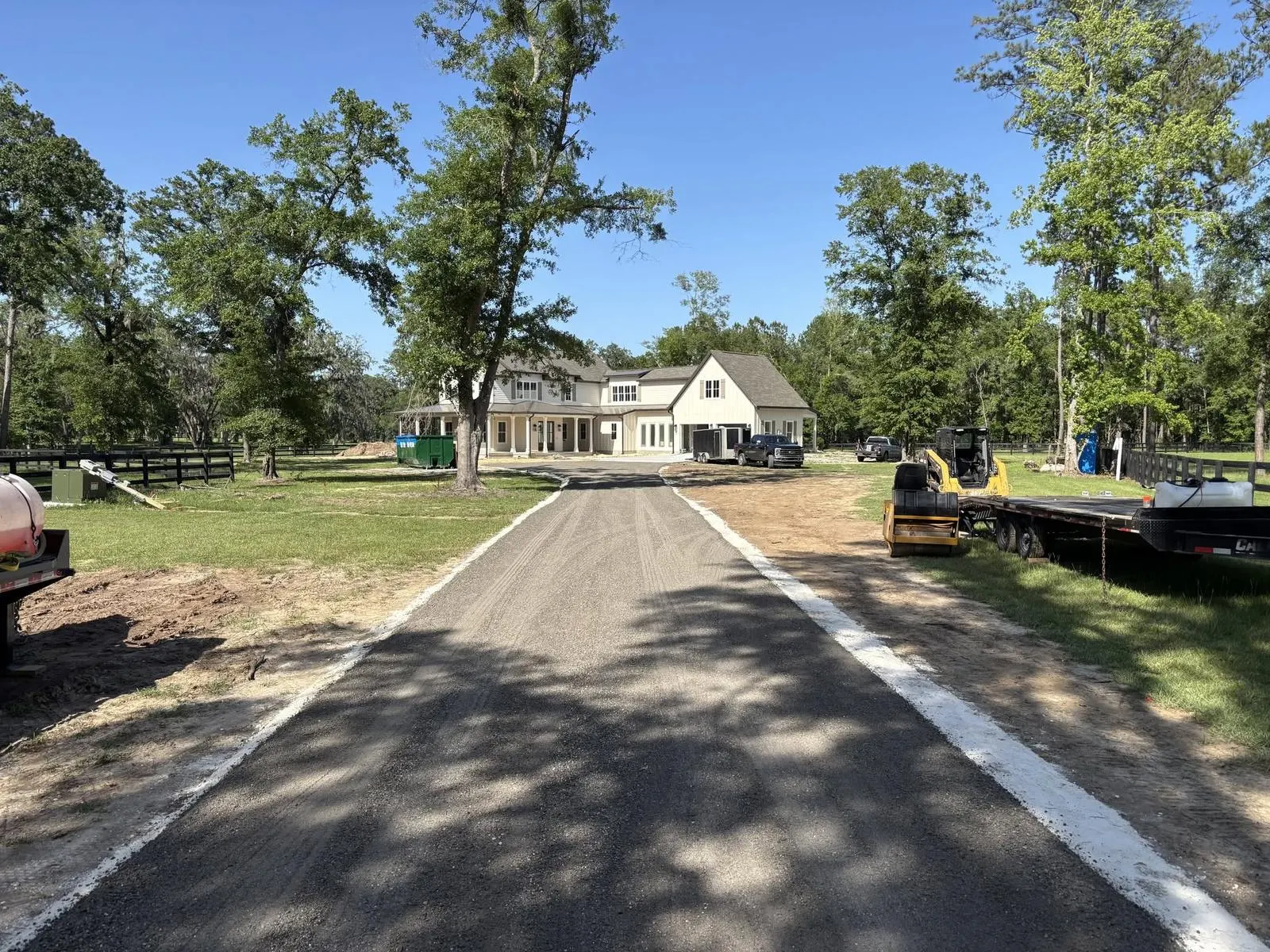
For a driveway around Gainesville, FL, hot mix asphalt gives you a firm, smooth surface with crisp edges, and recycled asphalt millings give you a looser, more rustic surface that suits longer, lightly used drives. Neither is the right call for every property. The deciding factors are how the drive gets used, how well it drains, and what is under it.
How millings and hot mix differ
Recycled millings are reclaimed asphalt, ground into aggregate (small crushed stone and asphalt pieces) and then spread and compacted into a driveway surface. Because the material already contains old asphalt binder, which is the sticky petroleum product that holds aggregate together, it can knit together under compaction and traffic. You can read more about this option on our recycled asphalt millings page.
Hot mix is aggregate mixed with asphalt binder at a plant, hauled hot, then placed and rolled to a set thickness. The binder is evenly distributed, so the surface is more uniform from edge to edge. That is why hot mix looks finished and holds a clean edge along a garage apron or a street connection.
Millings tend to look like a dark, textured gravel drive. Hot mix looks like the road you already know. If curb appeal and sharp edges matter to you, that difference alone may settle it.
Match the surface to driveway use
Start with traffic. A family with two cars and the occasional delivery truck asks something different of a driveway than a property with trailers, work vehicles or a steep turn. Hot mix is generally the better fit when loads are heavy or the drive sees constant turning, because the bound surface resists scuffing and displacement. Millings often hold up well on a long, straight, lightly used drive, though they may need occasional touch-up where tires turn or park.
| Factor | Recycled millings | Hot mix |
|---|---|---|
| Finish | Textured, loose-looking at first | Smooth and uniform |
| Edge definition | Softer edges | Clean, sharp edges |
| Loose material | Some surface fines and stones, especially early on | Little to none once cured |
| Upkeep | Occasional raking, filling and re-compacting low spots | Crack repair and sealcoating over time |
| Best suited to | Long, lightly used drives and rural entries | Daily-use drives, turning areas, street connections |
Then look at where the drive meets the street and your parking areas. Loose material can wander onto a paved road or into a garage, so a paved apron is common even on a millings drive. If you want one continuous, finished surface, consider driveway paving.
Upkeep is different, not absent
Millings may not be suitable for the same sealcoating treatment as hot mix, but they are not maintenance free. Expect to rake, top off thin spots and re-roll or re-compact now and then. Hot mix asks for crack sealing and, over time, a sealcoat to slow oxidation and water intrusion.
Local weather and paving conditions
North Central Florida is generally warm and humid, and Florida summers usually run long, with the wettest stretch typically from June into September. October can still bring rain as the region moves out of those wetter months, and November tends to be drier. That makes fall a workable window for paving, but only when the ground cooperates.
Wet or soft base material can ruin compaction, and compaction is what gives either surface its strength. A calendar date matters less than site readiness. Whether your drive is in Gainesville, Keystone Heights or Hawthorne, check the forecast and the condition of the base before scheduling.
Look at your own lot too. If water stands in your yard after a storm, if your soil is sandy and drains fast, or if the drive runs downhill toward the street, each of those changes how much base work and grading the job needs.
Check the base before choosing
A driveway is only as good as what is underneath it. Before picking a material, have the base, drainage and expected traffic assessed for the specific drive. A solid, well-drained base can support either option, and a weak one will cause trouble with both.
- Ask what the base looks like now and whether it needs added stone, grading or repair.
- Ask where water will go during a heavy rain and whether the drive needs a crown (a slight rise in the middle) or edge drainage.
- Ask what each surface will need for upkeep and how often.
- Ask how the new drive will tie into the street, the garage and any parking pad.
If you are starting from bare ground or replacing a failed drive, you can read about this service on our asphalt driveway installation page.
We are locally owned and operated, licensed and insured, and we offer a Free Estimate. Tell us how your driveway is used, and ask about the base, drainage and surface options.
Common questions
Is recycled asphalt millings a good driveway surface?
It can be, especially for long, lightly used drives where a rustic look is fine. It works best over a firm, well-drained base and with a bit of ongoing raking and filling.
What is the difference between asphalt millings and hot mix?
Millings are reclaimed asphalt that is spread and compacted, while hot mix is a blend of aggregate and binder placed hot and rolled. Hot mix is more uniform and has sharper edges.
Do I need a paved apron with a millings driveway?
Many owners add one where the drive meets the street or garage. It can help reduce loose material spreading onto paved surfaces and gives a cleaner transition.
Areas we serve
Our services
Have a question about your project? Call (352) 554-1347